Look, for decades, the road to getting a Black-led project greenlit in this town followed a predictable, flat-out exhausting script. You walk into a monolithic studio boardroom, you pitch your heart out, and you hope the panel of gatekeepers across the table can actually see the vision. Too often, they looked at a brilliant Black script the same way an old head looks at a Rubik’s Cube—confused, frustrated, and quick to give up when they couldn’t solve it in thirty seconds.
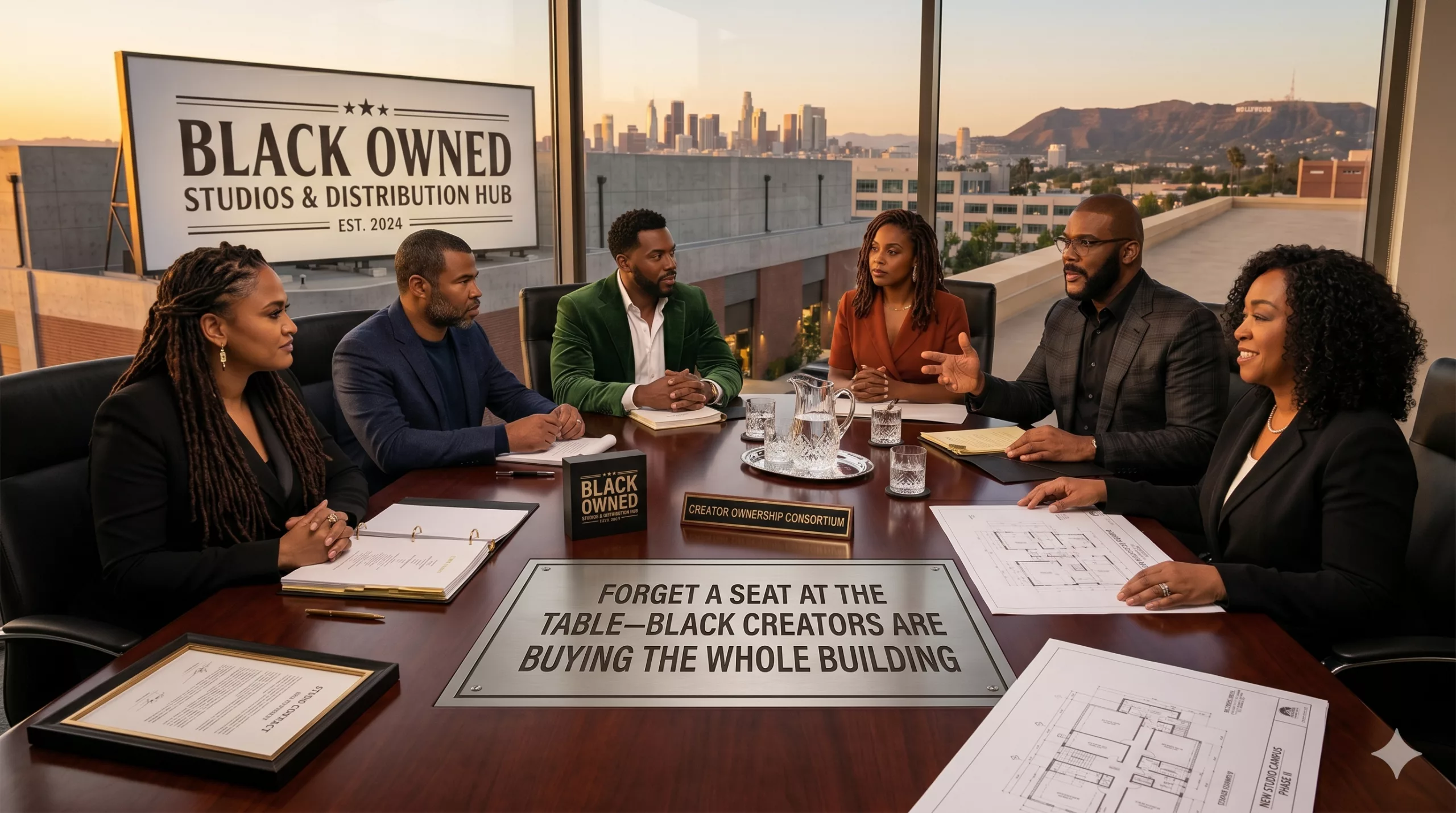
But the winds have officially shifted. Today, we aren’t just talking about Black creators finally getting a seat at the table. We are watching them build entirely new rooms, buy the real estate underneath them, and completely rewrite the rules of global distribution. Welcome to the modern renaissance of Black autonomy in Hollywood. Let’s break down how the game is being changed from the inside out.
Bypassing the Boardroom
The old studio system operated on a strict “permission slip” model. If a major distributor didn’t see immediate, mass-market blockbuster potential in a Black story, the project was quietly shelved.
But a generation of powerhouse creatives looked at that broken setup and decided they were done waiting for a green light. Instead of begging for a budget, they built their own infrastructure. We aren’t talking about vanity production titles just to slap a name on a poster; these are full-scale, independent production hubs.
- Tyler Perry Studios: Look at Perry’s massive, historic studio lot in Atlanta.
- ARRAY: Ava DuVernay’s multi-array company handles everything from indie distribution to crew education.
The goal has completely flipped from asking for a budget to allocating one. It’s the ultimate “Fine, I’ll do it myself” move—channeling pure Prince energy by building their own Paisley Park right in the backyard of the traditional studio system. This shift has become a cornerstone of true Black autonomy in Hollywood, proving that self-reliance is the ultimate leverage.
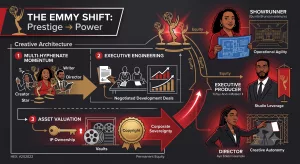
The Power of the Title Deed: Owning the IP
In traditional Hollywood deals, the trade-off for studio backing was almost always your intellectual property (IP). The studio cut the check, but they owned the characters, the sequels, the merchandise, and the rights forever.
The new wave of Black creators is flipping that economic math on its head. Taking a page out of the tech industry playbook, the focus is now squarely on IP ownership and absolute creative control.
The New Rule: Secure the rights first, bring in independent equity, and retain the underlying IP. When you own the masters of your own work, you aren’t a gig worker on your own project—you’re the equity holder.
By keeping the rights to their stories, these independent hubs ensure that the financial upside of cultural hits flows directly back to the creators who generated them. For a deeper look at how independent financing works, check out this Guide to Fim Financing. It allows for long-term world-building, in which sequels, spin-offs, and international formats are controlled by the authors, not by a corporate legal department.
Rewriting the Distribution Playbook
Of course, building a studio and owning your script doesn’t mean much if you can’t get it in front of the people. Historically, major studios held an absolute monopoly on distribution networks, acting like the neighborhood video store clerk who decides which VHS tapes get the prime shelf space and which ones stay hidden in the back.
The modern indie landscape has broken that monopoly wide open, shattering it like a Def Jam bassline blowing out a car stereo speaker. Creators are bypassing the traditional theatrical windows by getting smart with how they distribute.
- Direct-to-Consumer Models: Tapping directly into deeply loyal, underserved audiences via niche streaming apps.
- Strategic Licensing Partnerships: Playing major streaming platforms against each other to secure premium, non-exclusive deals
- Grassroots Releases: Turning a film launch into a localized, community-driven cultural event.
This decentralized approach proves what we’ve known all along: Black culture is a global economic powerhouse. As noted in a recent Hollywood Reporter industry report on global distribution trends, audiences no longer need a traditional studio middleman to find high-quality, authentic storytelling.
The Bottom Line
Make no mistake: this isn’t just a temporary trend or a single successful award season. This is a structural rewiring of how entertainment is financed, produced, and consumed. By controlling the infrastructure, protecting the IP, and dominating independent distribution, Black creators aren’t just breaking through Hollywood’s glass ceiling—they’re constructing a completely new skyline. This is the new black autonomy in Hollywood!
About The Author