Pull up a chair for a second. We need to talk about the massive shift happening in the streaming wars, because anyone who has been paying attention to media consolidation over the last decade knows exactly how this movie ends and BET+ is the latest puzzle piece.
The transition from traditional cable to internet-based delivery was supposed to give us ultimate freedom. But the golden rule of media distribution remains undefeated: consolidation is inevitable.
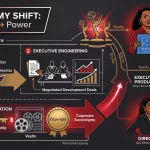
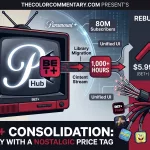
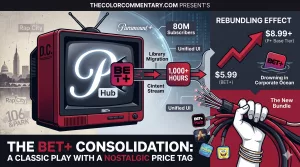
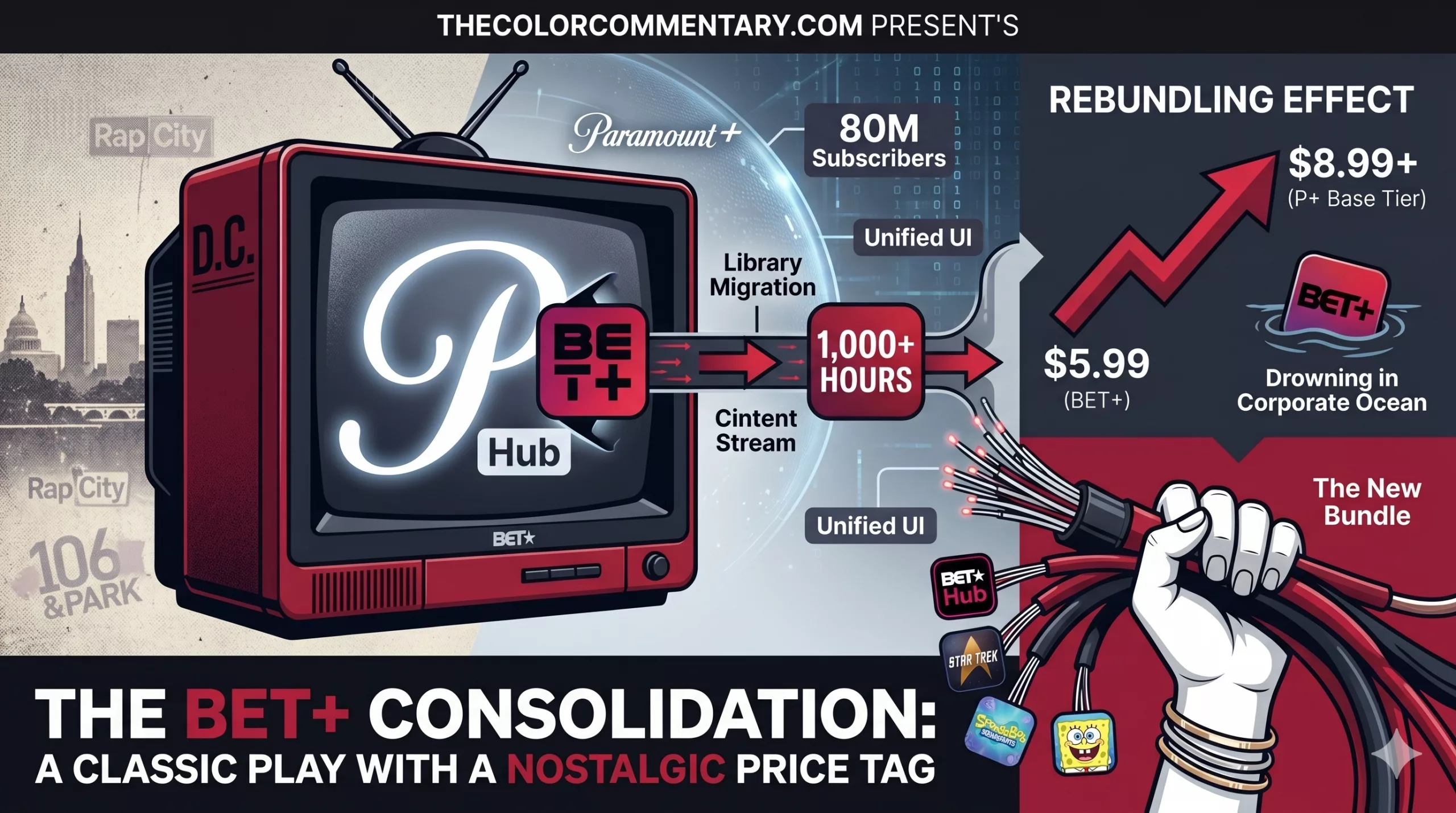
This June, Paramount is executing a classic consolidation play. After buying out Tyler Perry’s 25% minority stake in his joint venture, they are officially pulling the plug on the standalone BET+ app and folding its 1,000-hour library into the flagship Paramount+ ecosystem.
For me, this news isn’t just a corporate slide deck calculation. It hits right at the heart of my personal history, because long before I was analyzing streaming trends, I was a kid whose world revolved around BET.
The Heritage: When BET Was the Cultural Blueprint
Let’s talk about what BET actually meant before it became a tile on a smart TV. Before it was a global corporate asset, BET was born, bred, and broadcasted right out of Washington, D.C., the real Chocolate City. That local, authentic, chocolate-to-the-bone D.C. energy ran straight through the coaxial cables and into living rooms across America.
For a deeper look at how today’s media fragmentation contrasts with this era, you can check out our deep dive into The Code of Culture: Analyzing the Structural Power Play of the 2026 BET Awards Nominees right here on The Color Commentary.
In the 90s and 2000s, BET wasn’t just a channel; it was our cultural heartbeat.
- Teen Summit: Saturday mornings weren’t just for cartoons. Teen Summit gave young Black voices a real, raw, unfiltered platform to talk about real-world issues long before social media existed.
- Rap City: If you loved hip-hop, your afternoon schedule was built around The Basement with Big Tigger. Seeing your favorite artist step into that booth to drop a freestyle was the ultimate cultural litmus test.
- 106 & Park: You rushed home from school to catch AJ and Free (and later Rocsi and Terrence) counting down the top ten videos, setting the trends for music, fashion, and culture in real time.
- BET UnCut: And if you stayed up way past your bedtime on a Friday night, you entered the absolute, wild-west chaos of UnCut. It was unfiltered, late-night counter-culture at its peak, where a certain Nelly video and an infamous “credit card swipe” taught a generation way more about magnetic strips than any classroom lecture ever could.
To go from that era of appointment-viewing cultural dominance rooted in Chocolate City to seeing the brand get swallowed up by a massive corporate entity is a bittersweet pill to swallow. As we explore in our piece on the corporate strategy behind media preservation, navigating legacy content in the streaming age is a complex evolution. Let’s look at the tape to see how this play actually grades out.
The Positives: Scaling Up the Distribution Pipe
From a pure distribution and strategic standpoint, there are some undeniable wins here:
- The Exposure Influx: Let’s look at the data. BET+ was running a highly loyal but ultimately niche offense with 3.5 million subscribers. By migrating its content into a dedicated “BET Hub” inside Paramount+, that library is instantly getting called up to the big leagues, gaining exposure to Paramount+’s massive roster of 80 million global subscribers. You can read the official announcement regarding the transition on Paramount’s Sneak Peak platform.
- The Tech Stack Upgrade: Let’s be real, running a standalone streaming app is an operational nightmare. When high traffic hits, poorly optimized apps choke. Moving BET+ onto Paramount+’s unified backend infrastructure means better content delivery networks (CDNs), smarter recommendation engines, and a drastically smoother user interface.
- The Tyler Perry Security Blanket: Fans can breathe. Even though Tyler Perry cashed out his equity stake, his massive production deal runs through 2028. Hits like Zatima and All the Queen’s Men aren’t going anywhere. As reported by TheGrio, they will just have a different logo in the corner of your screen.
The Negatives: The “Niche Tax” and Cultural Dilution
But as any consumer who has watched their monthly bills creep up knows, the viewer always pays for the upgrade.
- The Subscription Price Hike: This is a classic bait-and-switch. BET+ was a thrifty, hyper-targeted play at $5.99 a month for its essential tier. Now, if those 3.5 million subscribers want to keep their shows, they are forced to migrate to Paramount+, where the base tier starts at $8.99 a month. That is a direct hit to the consumer’s wallet for the exact same content.
- Drowning in the Corporate Ocean: There was immense cultural value in having a standalone, premier digital storefront entirely dedicated to Black culture and creators. Merging it into a corporate mega-app means BET content now has to fight for homepage real estate against Star Trek, UEFA Champions League soccer, and SpongeBob.
- The Content Red Pencil: Whenever libraries merge, things get lost. Underperforming series get quietly shelved, and the chances of ever seeing deep-archive classics from the network’s golden era, like old episodes of ComicView or early award shows, buried inside a giant corporate database are slim to none.
The Big Picture: Rebuilding the Cable Bundle
Why is Paramount doing this now? Because they are prepping for the ultimate endgame: a massive merger with Warner Bros. Discovery.
Folding Showtime was Phase 1. Swallowing BET+ is Phase 2. They are trimming the fat and streamlining the business so they can easily integrate when the giant merger goes through. For context on how this fits into their overarching strategy, SlashGear outlines the timeline of Paramount’s ecosystem expansion and prior network integrations.
The irony here is incredibly rich. We spent years fighting to “unbundle” cable so consumers could pay only for what they wanted. But the cost of customer acquisition on standalone apps is too high, the churn is too brutal, and the tech is too expensive to maintain.
So, what are we doing? We are rebundling. The era of the cheap, hyper-focused standalone app is dead. We are right back to buying big, bloated, expensive packages; only now, they run over fiber instead of coaxial cable.
About The Author