I’m going to confess something that might make me sound like an Unc of the cable era: I absolutely hate binge-watching.
There, I said it.
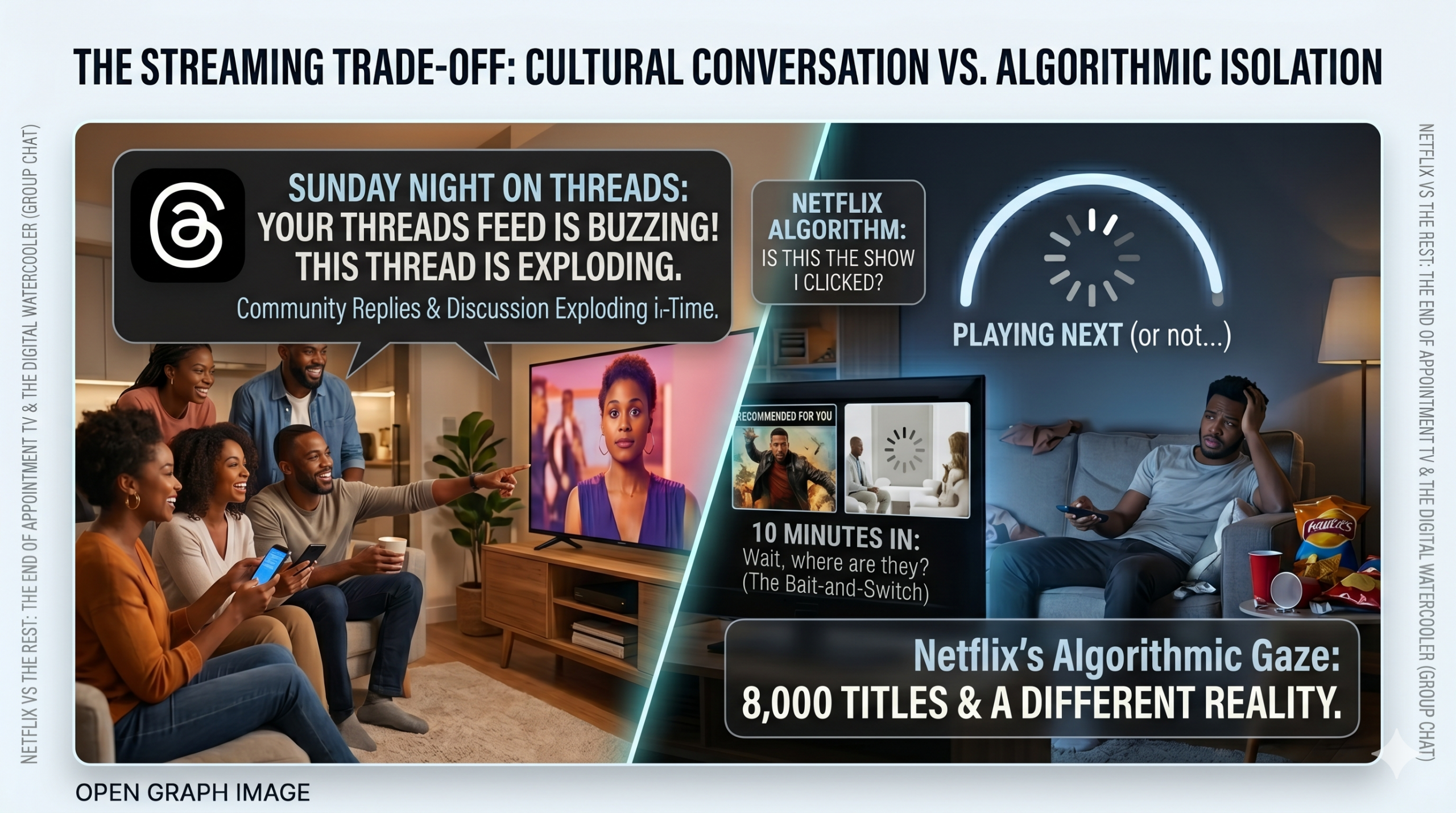
I don’t want to consume an entire season of television over a single rainy weekend. I don’t want to dodge spoilers on Twitter like a high-stakes game of Minesweeper because I didn’t stay up until 3:00 AM on a Friday to watch all eight episodes. Most of all, I miss the Sunday night ritual. I miss the group chat blowing up in real-time. I miss the Monday morning debates at the barbershop, the beauty salon, or the office breakroom.
I miss the watercooler.
Yet, despite having the vastly superior release model, legacy networks like HBO (Max), Disney+, and Paramount+ are losing the streaming wars. Netflix is sitting on over 325 million subscribers, while the competition is bleeding cash, merging, or quietly licensing their best shows back to Netflix.
How did this happen? How did a company that actively killed our favorite shared cultural moments win the crown?
It wasn’t because their shows are better. It’s because legacy media catastrophically failed at two things: managing library depth and building a personalization algorithm.
1. The Library Trap: Franchise Fatigue vs. Constant Noise
When Disney+ and Max launched, they assumed their massive legacy vaults would secure victory. They thought, “We have Star Wars and DC. Netflix has nothing.”
But they misunderstood how modern libraries work when you remove the weekly release schedule.
Legacy Apps: [Big Franchise Drop] —> 8 Weeks of Weekly Buzz —> Dry Spell —> Churn (Cancel)
Netflix: [Continuous Drops] —> Daily Custom Feeds —> No Exit —> High Retention
- The Churn Problem: Legacy apps relied heavily on tentpole franchises. But once a viewer finished the latest Marvel or Game of Thrones spin-off, they looked around the clunky, empty app and hit “Cancel Subscription.”
- The Depth Deficit: Netflix spent a decade building a massive, globally diversified library. In the US, Netflix boasts nearly 8,000 titles—and 62% of that catalog is Netflix-owned originals.
While I would much prefer a single, high-quality show released weekly, the average consumer demands a constant stream of background noise. Netflix built a self-sustaining content factory that feeds this beast; the competition ran out of ammo.
2. The Algorithmic Chasm: Browsing vs. Watching
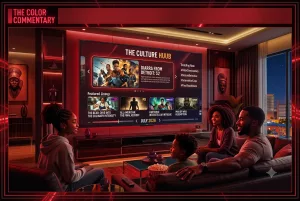
We’ve all experienced “Streaming Paralysis.” You open an app, scroll horizontally through generic rows like Comedy or Action for twenty minutes, give up, and close the app.
This is where the competitors truly failed us. They built digital video warehouses; Netflix built a behavioral prediction engine.
The “Taste Communities” Secret
Most apps categorize you by basic demographics. If you watch one action movie, your entire feed becomes explosions.
Netflix’s algorithm ignores basic demographics entirely. Instead, it groups users into thousands of hyper-specific “taste communities.” If you and a viewer in Tokyo both watch slow-burn indie dramas with dry humor after 10:00 PM, you’re in the same bucket.
The Custom Artwork “Bait-and-Switch”
If you want to know how deep Netflix’s algorithm goes, look no further than your homepage thumbnails. We’ve all noticed it: you’re scrolling through Netflix and you see a poster featuring a Black actor, making you think, “Oh, let me check this out, it looks like a Black-led film.” You click, only to realize that actor has about ten cumulative minutes of screen time in a completely white movie.
Netflix denies they use race or demographic data to target viewers, but their algorithm does track your viewing habits with terrifying precision.
- If the algorithm knows you frequently watch movies with Black leads, it will dynamically change the artwork for any film to highlight a Black cast member—even if they are a minor supporting character.
- Prefer romance? The thumbnail for an action thriller might focus on the leads sharing a quiet, intimate moment.
Legacy media networks, run by traditional television executives, treated their apps like digital TV guides. They expected you to come looking for the content. Netflix understood that in the internet age, the content has to find you—even if it has to trick you a little to do it.
The Ultimate Irony: A Victory of Tech, Not Art
The tragedy of the streaming wars is that Netflix’s competitors actually had the right idea about how we should watch TV.
Think about the cultural grip of Insecure, Snowfall, Abbott Elementary, or the peak seasons of Power. Those shows proved that the weekly release model is vastly superior for building a sustained cultural footprint. It turned watching television into a communal, social event. It fueled “Black Twitter” Sunday nights, where thousands of people laughed, argued, and broke down character flaws together in real-time.
But because the legacy studios built such terrible, clunky technology, they couldn’t keep users engaged between those weekly episodes. They lacked the algorithmic smarts to keep people inside their ecosystem, and their libraries weren’t deep enough to prevent massive subscriber churn.
Netflix didn’t win because they make the best television. They won because they are a world-class tech company. They brute-forced the binge model into cultural dominance through sheer engineering prowess—even if it meant sacrificing the group chats and collective moments that made us love TV in the first place.
What do you think? Are you a binge-watcher who wants the whole season at once, or do you desperately miss the era of weekly appointment viewing and live-tweeting? Let’s bring back the watercooler—hit me up in the comments below!
About The Author